Showing posts with label soy beans. Show all posts

Friday, April 07, 2023

daizumen

Kikkoman came out with these daizumen (soy noodles), I think awhile back, but I just heard about them recently

There are different flavors...and since there is a commercial running, they have been kind of hard to find.

The one I found at the market was tantanmen style.

The sauce has soy meat as well as pork in it.

And the noodles have regular flour mixed in with the soy flour.

One package is one serving and it is just right for me, but a little too small for Satoshi.

I also served this with salad.

The noodles had a slight "smell", I think from the soy, that I didn’t care for 

I hope to find the bolognese version, yakisoba version and yuzu oroshi version to try. 

Have a nice weekend.

Thursday, April 24, 2008

gomoku mame (minus 1)

Last week, Kazumi came over to bring me an ice cream maker that she didn't want. She also brought over these dried daizu (soy beans) which her friend grew.

She told me that she usually makes gomoku mame with the daizu. So, I looked in my cookbooks and found a recipe for it. Gomoku stands for 5 ingredients--so there are supposed to be 5 different items besides the beans included in the recipe.

Gomoku Mame :adapted from Orange Page: "Obachan no aji" Serves 4
1 cup dry daizu (soy beans)
1/4 cup of hijiki (edible brown seaweed)
1 small piece of gobo (about 6 inches)
1/2 renkon (about 3 inches)
1 small carrot (about 6 inches)
1/2 piece of konnyaku (about 2 inches)
vinegar
5 tablespoons of sugar
5 tablespoons of shoyu (soy sauce)

I soaked 1 cup of beans the night before.

In the morning, I made a list and went to the market.

Picked up some gobo (burdock), renkon (lotus root). Since I had carrots, and hijiki (edible brown seaweed), I was all set. As I was walking back from the market, I realized that I had forgotten to buy konnyaku (devil's tongue jelly)....sigh...since I was already half way home and I decided to do without.

Clean your gobo with the back of your knife, it will scrape off all the dirt and part of the skin. Cut the gobo into 2 cm thick disks then cut into four pieces. Do this for 1/2 a stalk of gobo.

With the renkon, peel it then cut it into cubes about 2 cm thick.

Soak the renkon and gobo in water and 1 teaspoon of vinegar for 10 minutes.
After the 10 minutes, boil the gobo and renkon for 2 to 3 minutes...Drain.

Cut a carrot into 2 cm thick disks and then into four pieces. Do this for the whole carrot. Cut the konnyaku into 2 cm thick cubes.

Bring water to a boil then turn down to a simmer, be sure to cover the beans with enough water and simmer without the cover for an hour and a half to two hours. Be sure to religiously scrape off the scum that forms on the top. You may need to add water.

After the beans are soft, add the gobo, carrots and konnyaku and simmer without the cover for 14 to 15 minutes--religiously scraping the scum on the top.

Add the renkon and hijiki and simmer for another 5 to 6 minutes.

After the 5 to 6 minutes, check the renkon to see if it is soft with a fork. If it isn't, simmer a little longer. If it is soft, add sugar. Boil for another 10 minutes.

Add the shoyu and simmer for another 5 to 6 minutes.


This dish gets better and better in the following days.

NOTES: this dish is a bit labor intensive, but makes a nice side dish for your bento (boxed lunch) or a nice alternative to meat for a main dish.

Sunday, July 15, 2007

dinner for one

Well, the typhoon has passed Osaka, I think we got off easy with just a lot of rain. This morning the sun was actually shining as if the typhoon never existed.

Satoshi is off to Guam & Saipan for business. It was kind of questionable with the typhoon, but it looks like he'll be able to fly out from Narita. (He has to fly out from Narita because all the flights from Kansai were full.)

So, it is just me for dinner tonight. Kind of sad cooking for one...oh well.

I made buta kim chee donburi (pork with kim chee bowl) and put it atop lettuce, mizuna and rice. I also had carrot salad, some daikon pickles and the spicy soybeans. The spicy soybeans are good cold as well as straight out of the pan.

I may not post for awhile, unless I get inspired to cook this week, but I wouldn't hold my breath, although you never know...

Have a great week!

Saturday, July 14, 2007

waiting for the typhoon to pass

Well, the typhoon is now over Kyushu and part of Shikoku, it is estimated to pass over Osaka either tonight or tomorrow. In the meantime, we have been having rain off and on during the day. (Can you believe that Satoshi had to go to work?)

Anyway, I saw the recipe for this pupu (appetizer in Hawaiian) in Gourmet Magazine's January issue. I also saw it being served here. (I think it may be a trendy thing in Hawaii now)...stir fried soybeans with garlic and chile.

Another easy dish to make and really good with BEER!

Stir Fried Soybeans with Garlic & Chile
from Gourmet January 2007--adapted from Pineapple Room

1 lb. soybean (frozen in shell)
2 tablespoon soy sauce
2 teaspoon oyster sauce
1 teaspoon sesame seed oil
1/4 teaspoon dried hot red pepper flakes
2 teaspoon vegetable oil
2 teaspoon minced, peeled fresh ginger
2 teaspoon minced garlic

Cook soybeans in 5-6 quart pot of unsalted water for 5 minutes then drain in colander.

Stir together soy sauce, oyster sauce, sesame oil and red pepper flakes in a bowl.

Heat wok over high heat until a drop of water evaporates immediately.

Add vegetable oil, swirling to coat wok. Add ginger & garlic and stir fry until fragrant (about 15 seconds). Add soybeans, stir fry until lightly charred (about 2-3 minutes).

Add soy sauce mixture and stir fry until soybeans are coated and most of liquid has evaporated (about 1 minute).


Enjoy!

I had this appetizer for dinner along with shogayaki donburi (pork ginger bowls) topped with okra and green onions and of course...BEER!

NOTES: I used fresh soybeans for this recipe. The flavor of the sauce is very addicting and leaves a little sting on your lips after you have eaten a few.

Monday, June 04, 2007

myogazushi

My student and friend Kazumi loves to cook, so she is always sharing new food ideas and recipes with me at our lessons. At a lesson last week, she gave me some pickled ginger, pickled myoga and a recipe for myogazushi (ginger shoot sushi). She said that her family eats this dish in the summertime because it is so refreshing.

Myoga is a type of ginger and I think it may be the shoots of the ginger. In Hawaii, the only time our family ate myoga was for special occasions. It was served raw and usually accompanied cooked tako(octopus) and a miso (soy bean paste)sauce as a pupu (appetizer).

Since Kazumi gave me all of the pickled items (photo of the pickled myoga), all I had to do was cook the rice and edamame, then assemble the sushi.

Shinshoga no Amazuzuke(Pickled Spring Ginger)
600-800g shinshoga (spring ginger)
150g sugar
20g salt
2 cups vinegar

1. Wash the ginger and wipe dry.
2. In a bottle, put the ginger. Heat the other ingredients and cool.
3. Pour over the ginger and store in the refridge.

Myogazushi (Ginger shoot sushi)
3 cups rice
3 cups water
2 tablespoons sake (rice wine)
60g myoga (ginger shoots)
60g shinshoga amazuzuke (pickled spring ginger)
1/4 cup edamame (soy beans), cooked and shelled
1/2 cup vinegar
2 tablespoons sugar
1 teaspoon salt
kelp

1. Put the vinegar, sugar & salt together, set aside.
2. After blanching the myoga, place into the mixture in #1.
3. Cut the pickled spring ginger into 2 cm slices
4. 1 hour before cooking the rice, wash it and drain well. Put some konbu (kelp) into 3 cups of water to make "kelp water". *leave the kelp in for about 30 minutes. Add the kelp water to the washed rice and add the sake. Let the rice soak in the kelp water and sake for about 30 minutes. Cook the rice in this water mixture.
5. Take the myoga out from mixture #1 and slice thinly, save this mixture.
6. After the rice is cooked, lay the rice out into a hangiri (bamboo tub) or anything that can spread the rice out flat to cool a bit.
7. Use 80cc of mixture #1 and sprinkle onto the rice while fanning with an uchiwa (hand-held fan) and fluffing the rice with a shamoji (rice paddle).*it helps if you have a helper fan while you fluff, if not, just take turns at fanning and fluffing.
8. After the rice is seasoned, add the sliced ginger and mix well. Top with sliced myoga and edamame.
9. Enjoy!

NOTES: I didn't have konbu, so I used wakame. I think the flavor is similar but not as strong as konbu. This dish was very sappari (a term we use when describing food or action meaning refreshing), the sourness from the pickled items matched nicely with the seasoned rice. I served it with some grilled salmon and veggies. (Thanks Kazumi!)

Have a nice week!

Monday, November 20, 2006

bagels (part 3) and grains, grains, grains

I tried making bagels again today. This time with a little more success. I increased the amount of flour, yeast, sugar and water and also increased the amount of time to let the dough rise. The dough got bigger, though it was hard to roll to form the bagel, which resulted in all of them falling apart as I "kettled" the bagels in hot water. Still, it was crispy on the outside and chewy on the inside (I had one, fresh out of the oven with dinner--a veggie soup).

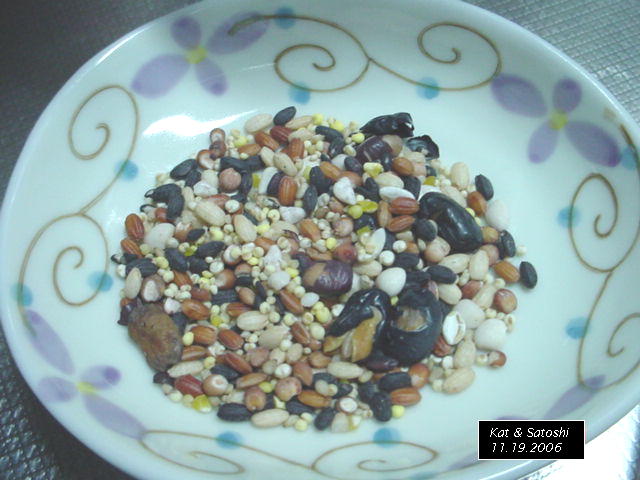
On another note--I don't know about you, but I love grains, in breads and in my rice. I wanted to show you what I add to my rice before cooking it. In Japan, there are all sorts of grains called zakkoku to add to your rice like corn, amaranth, quinoa, sesame seeds, barley, adzuki beans, black soy beans and assorted millet.

This is the 16-grain mixture by a company called HakuBaku. By adding grains to your rice, you can add more fiber and minerals to it. They also have a 5-grain mixture which I've also tried.

I put about a tablespoon or two of the grains into a fine sieve and run water over it, to rinse it. Caution: If you wash the grains with your regular rice, you will lose most of the millet, since they are VERY tiny. Then I add the grains to the rice, add the water and cook.

Saturday, June 24, 2006

trying to beat the heat (part 2)

So now that summer is here, and it is WAY to humid for my likings here in Japan, I've been in a salad kind of mode and looking for nice, refreshing ways to dress them up.

Here's a recipe I found today while reading Gourmet Magazine's April 2006 edition.

Lemon Oregano Vinaigrette : Adapted from The Signature Room at the 95th, in Chicago. Makes about half a cup

1/2 garlic clove
1.5 teaspoons finely grated fresh lemon zest
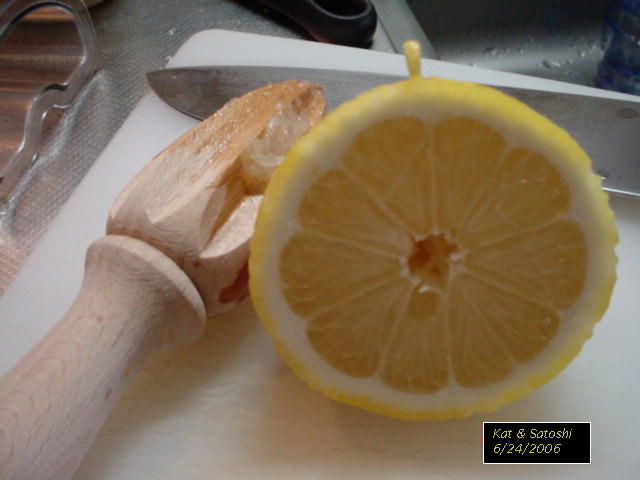
2 tablespoons fresh lemon juice
1 tablespoon distilled white vinegar
1.5 teaspoons Dijon mustard
1.5 teaspoons mild honey
1/4 teaspoon salt
1/4 teaspoon black pepper
3 tablespoons extra-virgin olive oil (EVOO)
2 tablespoons canola oil
1.5 teaspoons chopped fresh oregano

Blend all ingredients except oregano in a blender until combined well. Transfer to a bowl and stir in oregano, then season with salt and pepper.


Notes: if you are using a small food processor, like I did, make sure to slice up the garlic clove before pulsing or you will have a mess in your kitchen (because the garlic moved the blade up and leaked some dressing)--like I did. Also, I used 5 Tablespoons of EVOO, since I didn't have canola oil. And I used about a 1/2 teaspoon of dried oregano.

This dressing was really good! Lemony, not too garlicky really refreshing. Definitely worth making again!

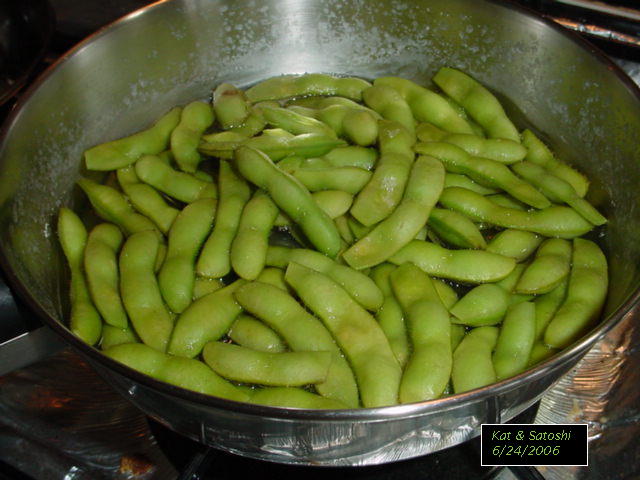
Another food that is popular in Japan, especially during the summer, is edamame (soy beans). I like it because it is really easy to prepare, and I don't have to stand near the stove as it cooks. In Japan, they come packaged--still in their pods, and sometimes they are even still attached to the plant!
Get a saute pan with a lid, or any shallow pan with a cover will do.
Snip the bean pods (where it was attached to the plant), I think this is to allow for even cooking and seasoning.
Rinse them.
Lay them as flat as possible into the pan.
Add a cup of water and cook for about 7 minutes on high heat. (You can add some salt before turning on the heat, or after cooking, whichever you prefer.) After the 7 minutes check to see that most of the pods have opened a bit, if not, you can cook for a minute or two more, take them off the heat and run under cold water.
Sprinkle with some kosher salt and enjoy!

Notes: try to make this ahead so that you can chill them in the refrig before eating!

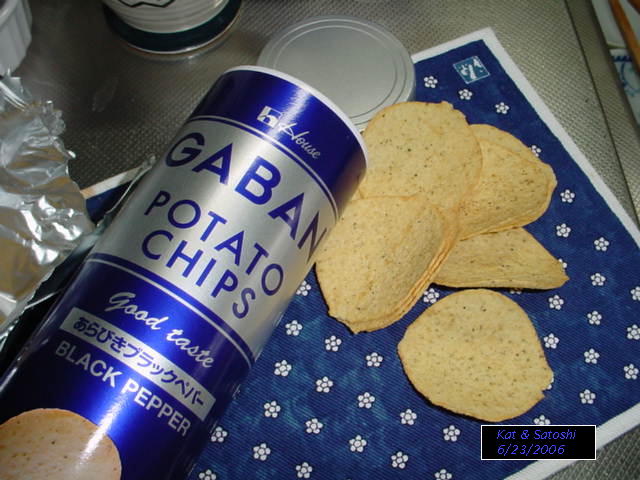
Gaban, a spice maker in Japan teamed up with House Foods, a company which makes curry rues and other "quick food" items and came up with a black peppered potato chip. The chip is a "fake" potato chip (formed into a chip shape like Pringles), but the taste is great--nice and peppery! They also have a chili pepper version, in a red container, for you thrill-seekers!

Today, my student, Tomomi, brought me some onions which her parents got from some of their friends. They are huge! Will definitely be roasting some of these in the next couple of days. (Thank you!)

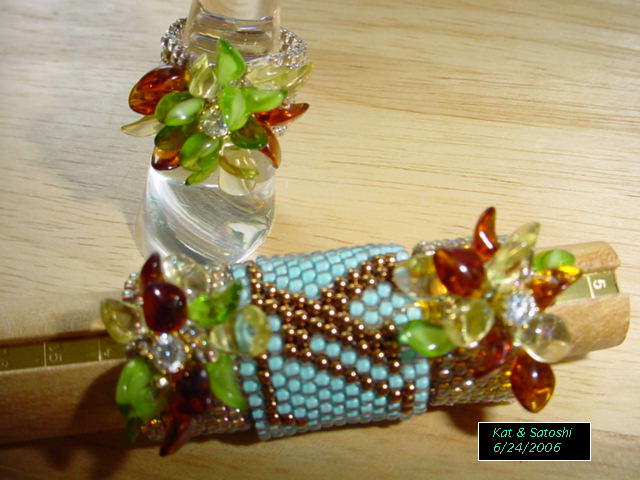
Here's another bead stitch project which I just finished. I still need to get it graded by the teacher. The 3 similar rings are the actual project. The "Louis Vuitton" marked ring was an extra project. Boy, those seed beads are tiny!

Hope you are keeping cool where you are and enjoying the weekend!