While watching another episode of "Matsuko no Shiranai Sekai", they talked about sweet potato in particular, hoshi imo.
Hoshi imo is sweet potato that is steamed, sliced and then dried.
This episode reminded me that we visited a shop in Ibaraki that sold dried sweet potato called Daimaruya.
After watching this episode, we went to the supermarket and Satoshi found these hoshi imo.
The one on the left is a whole sweet potato, they use smaller sweet potato and since it takes longer to dry, most companies/farmers don't make a lot.
The variety for this version is called Beniharuka.
The sweet potato on the right has the skins left on.
The variety is called Silk Sweet.
According to the show, hoshi imo uses a variety called Tamayutaka and was dried to a point where when you took a bite, there was a pull to it, almost like beef jerky.
Nowadays with more tender varieties of sweet potato, the hoshi imo turns out more half-dried and still very sweet.
I've never bought hoshi imo in the past because the versions I've seen were really brown and not too appetizing.
I'm glad we tried these and will keep my eye out for more in the future.
Kat & Satoshi's eating and traveling adventures around Japan (and sometimes Hawaii)
Showing posts with label satsuma imo. Show all posts
Tuesday, March 10, 2020
hoshi imo
Adventure tags:
satsuma imo,
spring,
supermarket finds,
sweet potato
Wednesday, January 27, 2016
yaki imo man
Heard a high pitched whistle thingy tonight...it was the yaki imo (roasted sweet potato) man.
I've never bought from him though, kinda scared to.
Next time he comes around (and Satoshi's home), I'll be brave and check out the yaki imo man.
I've never bought from him though, kinda scared to.
Next time he comes around (and Satoshi's home), I'll be brave and check out the yaki imo man.
Adventure tags:
culture shock,
satsuma imo,
winter
Thursday, November 11, 2010
soup & soup
Apparently the hospital she is in now, does not have the proper facilities to treat her injuries.
Will keep you posted...
As you can see from my posts over the past couple of days, I've been playing around with my immersion blender/food processor.
One of the things I've made is soup.
Sometimes when we eat out they serve gobo (burdock) potage. Creamy and earthy.
Since I had gobo and satsumaimo (sweet potato) in my refridge, I thought it would be nice to try two different soups instead of just one.
I found a recipe online and split the liquid part of the soup between the two ingredients.
The results were delicious...sort of.
Here is the recipe I followed: from the internet
125 grams gobo (burdock), cleaned and cooked
125 grams satsumaimo (sweet potato), skinned, cleaned and cooked
1/2 onion, chopped
1 consomme cube
500 cc water (2.5 cups)
400 cc milk (2 cups)
20 grams butter (about 2 pats)
2 tablespoons flour
Prepare the gobo and satsumaimo--clean, cook and cut into small pieces, set aside.
Chop onion and heat in a pan with the butter, cook until translucent.
Add the flour and make a roux
Add the water, milk & consomme, cook until heated, do not boil.
Measure out 450 cc of this liquid and put into 2 separate pots.
Whizz with immersion blender until smooth.
If you do try the gobo soup, I would definitely recommend straining it, it was really gritty. Though I guess you know you are getting all the fiber from it.
The sweet potato soup was on the sweet side but had a smoother texture than the gobo one.
I used skim milk, but you could also sub with soy milk or even cream.
When cooking the onions, you can also add some salt, but I didn't because I used salted butter.
I also ground some pepper on each cup and decorated with some flat leaf parsley.
Aside from the grittiness, these two soups were really nice and perfect for the nip in the air.
I will send these soups to Deb at Kahakai Kitchen for her Souper Sundays.
Adventure tags:
autumn,
burdock,
dinners,
gobo,
recipes,
satsuma imo,
soup,
sweet potato
Thursday, October 01, 2009
sweet potato hummus
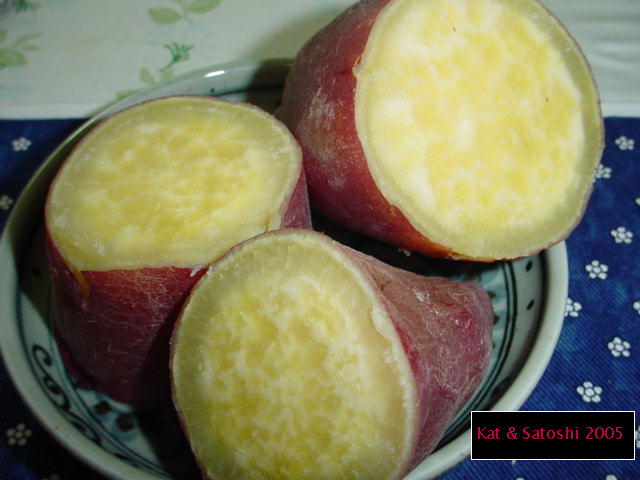
Sweet potatoes are in season here. I love steaming them. The satsuma imo (sweet potato) turns a bright yellow.
In July, while I was in Hawaii, I found this recipe in "Body and Soul" for hummus using sweet potatoes.
Since I had some leftover sweet potato, I bought a bottle of garbanzos and tried this recipe.
I've put the amounts that I used in (italicized parentheses).
makes about 4 cups (made a little over a 1 cup)
1 pound (about 453 grams) of sweet potato, steamed, cubed and peeled (150 grams sweet potato, steamed and cubed, I didn't peel all the pieces)
1 can (19.5 ounce) chickpeas, drained and rinsed (220 grams garbanzos about 7.5 ounces)
1/4 cup lemon juice (3 tablespoons lemon juice)
1/4 cup tahini (2 tablespoons tahini)
2 tablespoons EVOO
2 teaspoon cumin (1 teaspoon cumin)
1 clove garlic, chopped (1/2 clove garlic, chopped)
salt & pepper (I didn't add salt nor pepper)
Steam the cut sweet potato about 10 to 12 minutes
Whiz everything in a food processor
Add water if necessary (I added 1/4 cup of water)
Serve with pita and/or veggie sticks
My food processor is quite small, so there were a lot of "unprocessed" bits. Still I liked this, and would definitely make it again, maybe adding more sweet potato the next time, just to see if the flavors would be different. I served this with carrot and celery sticks.
Adventure tags:
autumn,
chickpeas,
garbanzo,
hummus,
recipes,
satsuma imo,
sweet potato
Wednesday, October 17, 2007
odds & ends
Awhile back, I had this bread. Since it was World Bread Day yesterday and since I had some leftover sweet potato from making gnocchi and some leftover an from making anpan...I tried to re-create it. I used the bread recipe that I always use, but didn't have enough filling. And for some reason, these guys came out HUGE and I weighed them as I was dividing the dough! The bread I had tried before was harder, more like a country-style bread. Still, with the slightly sweet potato and the sweet bean paste, it made a great snack.
Remember I made rafute and told you that Satoshi doesn't like it? Well, I fessed up to using his awamori and told him, " I made rafute, but since you don't like it, I didn't save you any." He quickly said, "But, I like rafute!"
So, I made some last night, I couldn't find pork belly and ended up buying the thigh portion instead which had less fat. For dinner we had rafute don (braised pork belly bowl), Satoshi bit into the pork and said, "ooh, what kind of fish is this?".....
Okay....so Satoshi's breakfast was shiru soba (soup noodle). This dish uses the stock from the boiled pork (remember I threw it out the last time?). Here is an adapted recipe from "Shiawase no Okinawa Ryori":Serves 2
2 bundles of Chuuka soba (chinese noodles)
4 pieces sliced rafute (braised pork belly)
handful chopped green onion
some sliced beni-shoga (red pickled ginger)
500cc (about 2.5 cups) katsuo (bonito) stock
250cc (about 1.25 cups) pork stock (the one from making rafute)
1 tablespoon rafute sauce
3 eringi mushrooms, sliced thinly
Follow the directions on the package to cook your noodles.
In another pot, add the pork stock, katsuo stock and rafute sauce to heat. If your rafute is straight out of the refrig, add it to the stock to heat.
After noodles are cooked transfer to bowl and add the heated stock.
Top with eringi mushrooms, green onions, beni-shoga.
Serve with koregusu (chili pepper water)

Since the nights and mornings are kind of nippy, I figured I should protect all my plants that don't appreciate the cold, namely tomato, basil, strawberry and italian parsley. I bought these plastic sheets from the 100 yen store ($1 store). It is actually a cover for your a/c but I made it into a "hot house", there were 2 in a package, so it only cost about $.50 to make each one! During the day, I take it off, so that they can "breathe" and the bugs and bees can do their thing.Hope your week is going well, Satoshi is off on a business trip for the next 2 days.
Adventure tags:
an,
autumn,
azuki,
baking,
bread,
hot house,
odds and ends,
okinawa,
plants,
rafute,
recipes,
satsuma imo,
sweet bean paste,
sweet potato,
tsubushian
Monday, October 15, 2007
satsumaimo no gnocchi kinoko sauce
It is Autumn, though most of the days don't feel like it yet, the evenings and early mornings do. In Japan, there are many veggies in season right now, mainly satsumaimo (sweet potato) and kinoko (mushrooms). There are all types of mushrooms in the stores. The ones I have here are shimeji (on the left--tricoloma/tricholome) and maitake (on the right--hen of woods/grifola frondosa).I found a recipe that showcases these ingredients of Autumn....Satsumaimo no gnocchi kinoko sauce (Sweet potato gnocchi with mushroom sauce).
The recipe doesn't take many ingredients, just making the gnocchi will take some time.
First steam your potatoes, the ones I steamed came out bright yellow.
Then you need to urakosu (strain) them. This part takes the longest.Here's the recipe adapted from a local newspaper.
Serves 4 (about 50 gnocchi)
Gnocchi:
300g satsumaimo (sweet potato)
1 small egg
65g flour
35g grated parmesan cheese
salt and pepper
Kinoko sauce:
15g butter
100g diced onion
50g bacon, thinly sliced
100g assorted mushrooms
100cc cream (about 1/2 cup)
20g grated parmesan cheese
parsley
salt to taste
1. Steam sweet potato (about 30 minutes). Peel while still hot. Strain to get sweet potato smooth.
2. Add the rest of the gnocchi ingredients to the sweet potato and mix well. Make into little balls and use the back of a fork to make ridges.
3. Boil some water and add 1 tablespoon of salt. Cook gnocchi for about 4-5 minutes.
4. In a pan, put the onion, bacon and butter and cook until onions and bacon are slightly brown. Lower heat then add the mushrooms. When the mushrooms start to wilt, add the cream and bring to a bubble.
5. Put gnocchi into plate and top with sauce, cheese and parsley.
6. Enjoy!
NOTES: the hardest part of this recipe was straining the potatoes, but it was totally worth it, all the fibers that are in the potato will be taken out when you are straining it and the result is smooth gnocchi. It was my first time making gnocchi, plus, I didn't read the recipe fully and ended up with larger and lesser gnocchi than the 50. When you put the gnocchi into the boiling water it will sink to the bottom, but after a couple of minutes it will come up to the top. Use a slotted spoon or net like spoon to scoop them out of the water. After the gnocchi came out of the water, I started the sauce. I didn't have bacon but had pancetta so I used that instead.Not something to make during a busy weekday, but if you make it ahead of time, I think you could probably re-heat it during the week. I think this sauce would go nicely with regular pastas too.
I hope you will try some of the Autumn ingredients where you are. Enjoy the season.
Adventure tags:
autumn,
gnocchi,
kinoko,
mushroom,
recipes,
satsuma imo,
sweet potato
Tuesday, April 03, 2007
goma-azuki-satsumaimo bread
Have you ever seen a bread this intense?Yesterday, I had a dentist appointment in Umeda. After my 3 month cleaning and check-up, I wandered the food floor of the Daimaru department store.
I bought myself a bento (boxed lunch) for lunch and also found this great bread made by Paul Bocuse, a well-known French chef--sorry but I had not known about Paul Bocuse until coming to Japan.
This bread ( I think this bread had some kind of French name, but it was in katakana and I couldn't remember it. )is a crusty french bread filled with kurogoma (black sesame seeds), azuki (adzuki beans), chunks of satsumaimo (sweet potato) and shirogoma (white sesame seeds) on top.
In the past, I had tasted another bread made by another bakery with just sweet potato and black sesame seeds, which was also very delicious, so I figured this bread with the azuki beans was a bonus layer of flavor.
I guess a slice of this might have tasted wonderful with butter and/or jam on it, but why would I want to cover up the natural sweetness from the beans and sweet potato?
Looking forward to having more of this for breakfast tomorrow!
Adventure tags:
azuki,
kurogoma,
satsuma imo,
sesame seeds,
shirogoma,
spring,
sweet potato
Monday, September 25, 2006
sweet potato salad
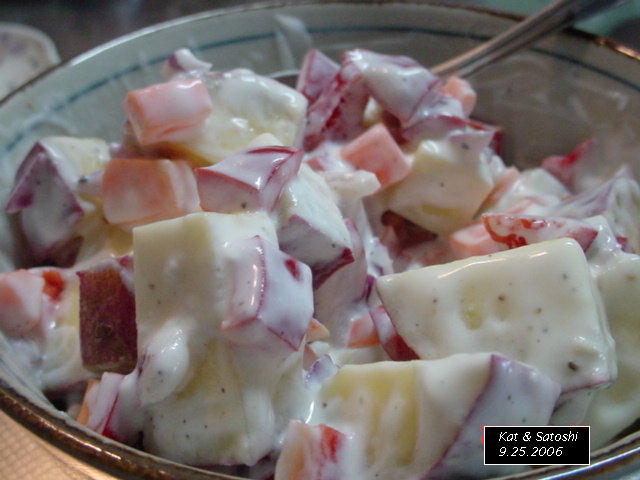
Part of tonight's dinner was a sweet potato salad. I combined carrots, red bell pepper, red onion and steamed sweet potato with a scoop of plain yogurt, a little squeeze of mayo and some grinds of pepper.I have a steamer basket that fits into my one and only big pot, it makes cooking sweet potato, corn, and beans a snap!
A little trivia...Sweet potato is in Japan is called satsuma imo. Satsuma is the old province name for the Kagoshima area and imo is potato. In the Edo period, most of the rice crops failed and a famine swept across Japan. Only the people in Satsuma (Kagoshima) were found to be in good health. They realized this was due to their eating lots of sweet potatoes. After the famine subsided, the government had everyone in Japan plant sweet potatoes as insurance against famine.
This salad was nice, not too heavy because of the yogurt and all of the flavors of each ingredient shined, I'm eating a bit early because I have a lesson tonight.
Adventure tags:
autumn,
kagoshima,
salad,
satsuma imo,
sweet potato
Thursday, December 15, 2005
leftovers, narutokintoki, sweets (part 2)
The weather is so cold these days, the high hasn't gotten higher than 7C and the low is REALLY low, like 2C. The areas on the Japan Sea side have gotten LOTS of snow over the past couple of days. The weather people were talking about a -35C degree wind from the north blowing over Japan...(okay, that would explain this weather)...at least during the day it has been sunny... although, I still would like to see some flurries... :)
The other day I made pork ginger for dinner. The recipe is rather simple: 1.5T sugar, 2T shoyu(soy sauce), 1T ginger, 2T sake (rice wine), 250g pork. I usually buy the pork thinly sliced and cut it into bite size pieces.
For the marinade, I usually use fresh chopped ginger. If you can't get fresh, the kind that is already chopped up and bottled is just as good. Soak for at least an hour or so. I usually try to soak it from the night before. After cooking it, I usually top it with sliced leeks or green onions. This photo is the leftovers of the pork ginger...called, pork ginger don (short for donburi or bowl). I lined the bowl with rice and lettuce then heated up the leftover pork ginger in a pan, added a beaten egg and put it on top of the lettuce. It was good, fast and easy! (definitely my kind of cooking!)
One food that is popular in Japan during autumn and winter is "yaki-imo" (roasted sweet potato). At night, you can hear the "yaki-imo" man (like the ice cream man in America), calling out to everyone over a loud speaker "ishi-yaki-imo". "Ishi-yaki" is to roast the potato on hot stones (kind of like when they roast a pig in the imu (roasting pit in the ground) in Hawaii) except the stones are in a metal container, like a barrel, many desserts during the autumn and winter here use sweet potato as fillings or toppings.
Naruto Kintoki is a sweet potato grown in Tokushima (Shikoku). Most sweet potatoes are known as "Satsuma-imo". "Satsuma" is the old name for the southern part of Kyushu. In the Edo period when the rice crops failed, a famine had swept over Japan. The government realized that the Satsuma area was the only area to survive the famine with little trouble because they were eating their sweet potatoes.
So, as a result, sweet potatoes were sent all over Japan as insurance against famine. Today, depending on the area, each has its own distinct name, shape and flavor.
Usually a sweet potato this size is rather expensive, but I got it for a little under $2. I steamed this guy in my steamer basket and had to have a piece of it when it came out....yummy!!
I think the reason they call this potato Naruto Kintoki is because Naruto is a city in Tokushima and Kintoki means a reddish color. And if you've ever seen Kintoki ninjin (Kintoki carrots) you'll realize that they are reddish colored carrots, not orange like regular carrots. And kintoki mame are red kidney beans.
In my last post entitled: sweets, I talked about ANA's new desserts. This is one of them, the caramelized pudding. I haven't tried either one yet, but will let you know when I do. :)
The other day I made pork ginger for dinner. The recipe is rather simple: 1.5T sugar, 2T shoyu(soy sauce), 1T ginger, 2T sake (rice wine), 250g pork. I usually buy the pork thinly sliced and cut it into bite size pieces. For the marinade, I usually use fresh chopped ginger. If you can't get fresh, the kind that is already chopped up and bottled is just as good. Soak for at least an hour or so. I usually try to soak it from the night before. After cooking it, I usually top it with sliced leeks or green onions. This photo is the leftovers of the pork ginger...called, pork ginger don (short for donburi or bowl). I lined the bowl with rice and lettuce then heated up the leftover pork ginger in a pan, added a beaten egg and put it on top of the lettuce. It was good, fast and easy! (definitely my kind of cooking!)
One food that is popular in Japan during autumn and winter is "yaki-imo" (roasted sweet potato). At night, you can hear the "yaki-imo" man (like the ice cream man in America), calling out to everyone over a loud speaker "ishi-yaki-imo". "Ishi-yaki" is to roast the potato on hot stones (kind of like when they roast a pig in the imu (roasting pit in the ground) in Hawaii) except the stones are in a metal container, like a barrel, many desserts during the autumn and winter here use sweet potato as fillings or toppings.Naruto Kintoki is a sweet potato grown in Tokushima (Shikoku). Most sweet potatoes are known as "Satsuma-imo". "Satsuma" is the old name for the southern part of Kyushu. In the Edo period when the rice crops failed, a famine had swept over Japan. The government realized that the Satsuma area was the only area to survive the famine with little trouble because they were eating their sweet potatoes.
So, as a result, sweet potatoes were sent all over Japan as insurance against famine. Today, depending on the area, each has its own distinct name, shape and flavor.
Usually a sweet potato this size is rather expensive, but I got it for a little under $2. I steamed this guy in my steamer basket and had to have a piece of it when it came out....yummy!!
I think the reason they call this potato Naruto Kintoki is because Naruto is a city in Tokushima and Kintoki means a reddish color. And if you've ever seen Kintoki ninjin (Kintoki carrots) you'll realize that they are reddish colored carrots, not orange like regular carrots. And kintoki mame are red kidney beans.
In my last post entitled: sweets, I talked about ANA's new desserts. This is one of them, the caramelized pudding. I haven't tried either one yet, but will let you know when I do. :)
Adventure tags:
bowl,
donburi,
ginger,
pork,
satsuma imo,
sweet potato,
tokushima,
winter,
yakiimo
Subscribe to:
Posts (Atom)